Boulder
Colorado's most structurally constrained luxury market — anchored by CU Boulder, federal research labs, and a permanent growth boundary.
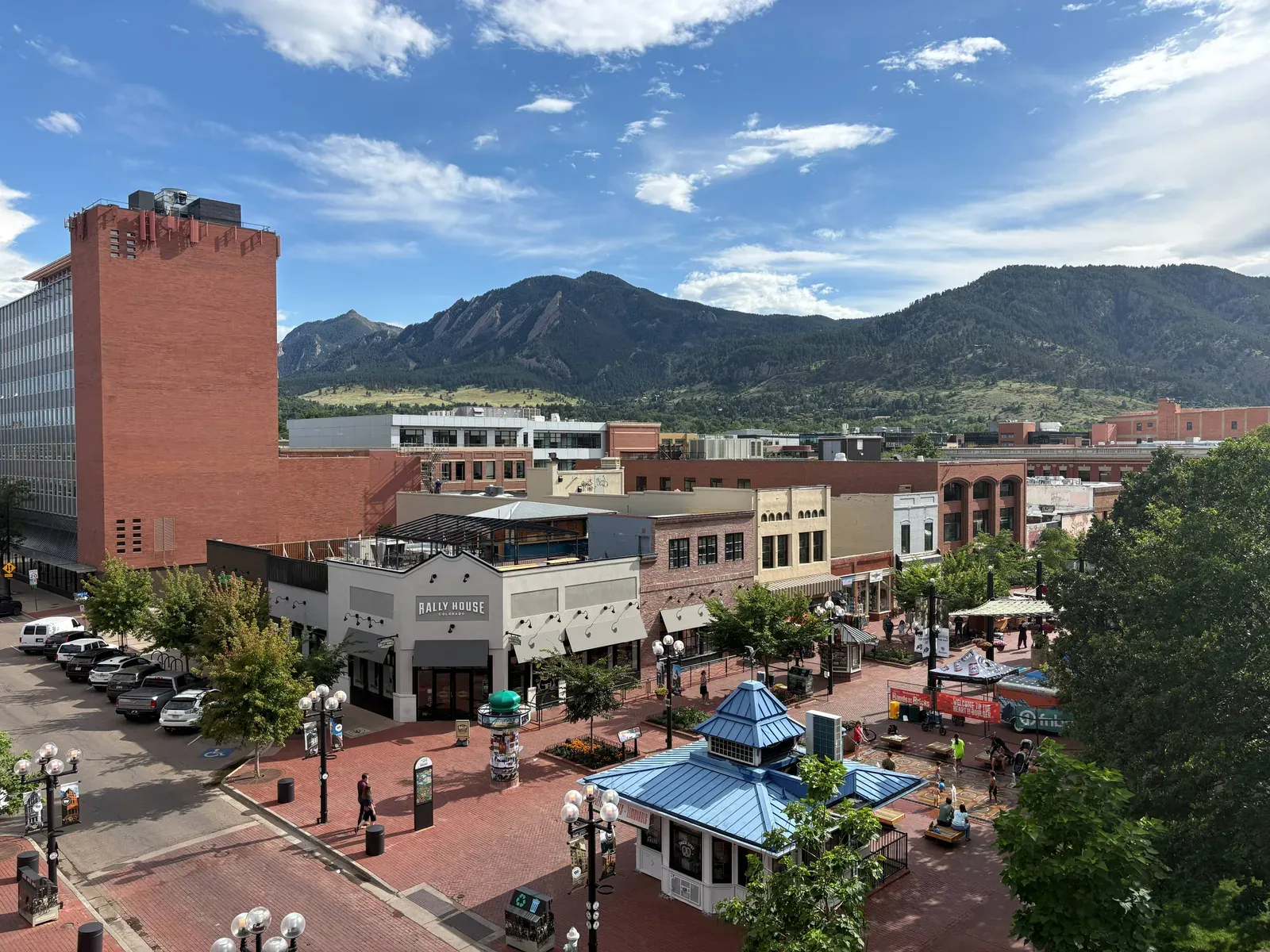
Boulder features an eco-conscious, academically driven atmosphere nested dramatically at the base of the Flatirons. In early 2026, the market operates with 2.73 months of supply and median prices exceeding $912,000, drawing buyers seeking premium outdoor lifestyles combined with a booming tech sector. Situated at 5,430 feet, the area evolved from a 19th-century supply town for gold miners into a premier global innovation center.
Community Highlights
- Median Home Price: $912,500
- Months of Supply: 2.73 Months
- Median Days on Market: 57 Days
- Median Household Income: $92,000
- Median Rent: $1,860 / month
- Elevation: 5,430 Feet
- Effective Property Tax Rate: 0.6% to 1.0%
- Commute Lines / Highways: US-36, Hwy 93, Hwy 119 / Flatiron Flyer Bus
- Walk Score / Bike Score: 57 / 86 (Platinum Bike-Friendly City)
| Lifestyle & Geographic Metrics | Score / Detail |
|---|---|
| Walk Score / Bike Score | 57 / 86 (Platinum Bike-Friendly City) |
| Commute Lines / Highways | US-36, Hwy 93, Hwy 119 / Flatiron Flyer Bus |
| Annual Snowfall / Sunny Days | 89 Inches / 300 Days |
| Elevation | 5,430 Feet |
| Effective Property Tax Rate | 0.6% to 1.0% |
Who is Boulder Best For?
- Technology and research professionals drawn to major employment hubs for aerospace and climate sciences.
- Active lifestyle buyers prioritizing immediate access to world-renowned rock climbing and trail running.
- Luxury real estate buyers seeking exclusive architectural builds and custom foothills estates.
Pros & Cons of Living in Boulder
Pros:
- Unrivaled municipal access to protected open space and mountain recreation immediately outside city limits.
- A highly educated population driving a robust, innovation-centric economy.
- Exceptional dining, arts, and cultural scenes heavily concentrated around the pedestrian-only Pearl Street Mall.
Cons:
- An extremely high cost of living with median home prices consistently hovering above the $900,000 mark.
- Strict zoning ordinances and greenbelt boundaries fundamentally limit new housing development, creating perpetual scarcity.
Real Estate Market & Top Neighborhood Spotlights
The Q1 2026 market indicates a stabilization phase for Boulder, with properties averaging 57 days on market, granting buyers a window for enhanced negotiation leverage. The architectural landscape is highly segmented by neighborhood. In Mapleton Hill, buyers will find historic luxury estates under mature tree canopies ranging from $1.5 million to $4 million. Moving toward South Boulder (SoBo), the focus shifts to mid-century aesthetics offering quick highway access, priced between $800,000 and $1.5 million. Finally, the Gunbarrel sector provides a semi-rural tech hub environment with housing values spanning $500,000 for attached units to $1.2 million for single-family residences.
| Real Estate & Demographic Metrics | Value |
|---|---|
| Median Home Price | $912,500 |
| Months of Supply | 2.73 Months |
| Median Days on Market | 57 Days |
| Median Rent | $1,860 / month |
| Median Household Income | $92,000 |
⚠️ Colorado Financial Insight: Following the enactment of Colorado SB 23-110 and CRS 38-35.7-110, residential real estate sellers within metropolitan districts must supply a mandatory disclosure linking to the district’s official website. This ensures buyers understand maximum debt limits and mill levy overlays, a crucial diligence step even in established markets.
Economy, Healthcare & Commute Times
The local economic infrastructure is anchored by major technology and research institutions, including Google, the University of Colorado Boulder, and federal laboratories like NCAR and NOAA. The nearest major healthcare network is Boulder Community Health, operating multiple advanced care campuses.
| Destination | Estimated Commute Time |
|---|---|
| To Downtown Denver | 35 mins |
| To Fort Collins | 50 mins |
| To Denver International Airport (DIA) | 45 mins |
Lifestyle, Schools, Parks & Shopping
Educational excellence is a hallmark of the community, managed by the Boulder Valley School District (BVSD) and highlighted by the nationally ranked Fairview High School. Recreational options are defined by Chautauqua Park and the extensive Boulder Creek Path system. Retail and dining experiences are heavily centralized around the iconic Pearl Street Mall. Buyers evaluating Boulder typically compare adjacent communities, including Louisville, Lafayette, and Niwot, to weigh pricing against proximity.
Planning a move to Boulder? As a father-daughter real estate team, we offer the best of both worlds — experience and modern insight. Contact Jeff and Brooke Spiker at Spiker Realty today to request a custom 2026 home price report, neighborhood map, or to schedule a private tour. Call Jeff or Brooke, or Book a call to get started.
Frequently Asked Questions
Why are homes in Boulder so expensive?
What is the median home price in Boulder?
Is Boulder considered a bike-friendly city?
What are you looking for?
Tell us a bit about your move. Jeff or Brooke usually responds within 24 hours.